
How to Read Your VA Rating Decision, Line by Line
The percent is the least useful part of a VA rating decision. Here is how to read the rest of the packet, section by section.

The percent is the least useful part of a VA rating decision. Here is how to read the rest of the packet, section by section.

A proposed reduction is not a reduction yet. VA must tell you in writing and give you time to respond, send evidence, and ask for a hearing. Here are five things to do the day the letter comes.

Most military sexual trauma is never reported, but VA can accept other proof that something changed. Here is what those markers are, where to find them, and how to build your claim.

Hypertension and MGUS are now Agent Orange presumptive conditions, and the places that count reach well past Vietnam. If VA told you no years ago, that was under rules that no longer apply.
Under the PACT Act, VA assumes 11 cancers and 12 respiratory conditions are linked to burn pit exposure. Here is who the list covers and how to use it.
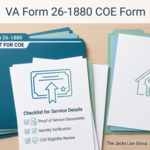
VA Form 26-1880 is how you ask VA for a Certificate of Eligibility, or COE. Most lenders need a COE to approve a VA home loan.

Can VA lower your rating if you ask for an increase? Learn what really happens, what protects the rating you have, and how to decide if it is worth it.

Special Monthly Compensation pays for specific losses and needs, not rating percentages. Learn what each SMC letter from K through S covers and why many veterans who qualify never claim it.
Most PTSD denials come down to one missing piece of proof, not whether you are suffering. Here are the three things VA looks for, and two times the hardest rule is relaxed.
Many veterans never claim what their service injury did to the rest of their body. Learn how secondary service connection works and the one piece of evidence it needs.

TDIU can pay you at the 100 percent rate even if your rating is lower. Learn who qualifies, how it pays, and what evidence matters.
There is no deadline to file a PACT Act claim, but waiting can cost you back pay. Here is who qualifies, what is covered, and what to do if VA denied you before the law passed.
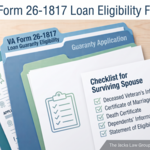
This guide explains VA Form 26-1817 in plain words. Unmarried surviving spouses use it to ask VA if they can use VA home loan benefits.

Stopping treatment after a VA decision can hurt your health and your claim. Learn why your treatment records still matter after a denial, a rating, or 100% P&T.

Staying organized and answering quickly can help you avoid many VA delays. Here are 12 simple steps, from signing forms to getting ready for your C&P exam.
Your VA claims file can be thousands of pages, and getting a copy can take months. Learn what is in it, why a review takes time, and how to protect your deadlines.
Waiting for VA to add a spouse, child, or parent? Here is what to check before you assume your dependent claim is lost.

A VA letter can grant DIC and deny Survivors Pension at the same time. Learn why, and what survivors should check in the letter.
A 2026 VA rule adds an official way to tell VA about emergency care at a non-VA hospital. Learn what the 72-hour window means and what records to keep.

Form 22-5490 is how a veteran's spouse, child, or other dependent applies for VA education benefits under DEA or the Fry Scholarship. This guide explains who may qualify and how to fill out the form.
VA extended the transition period for the legacy group in its family caregiver program through September 30, 2028. Learn who it covers and how new applicants are different.

VA changed its apportionment rules on February 9, 2026. Learn how new requests and existing awards are treated differently.
Many VA debts now have a one-year window to ask VA to forgive them. Here is what that means, which dates matter, and what to do first.
VA canceled its February 2026 medication-rating rule ten days after issuing it. Here is what that means for your rating, in plain English.

Moving while you wait on a VA claim? Here is what to update, how to handle exams, and how to keep track of deadlines, in plain English.
Henderson (client office): 1057 Whitney Ranch Drive, Suite 350, Henderson, NV 89014. Hours: Mon-Fri 9:00 a.m.-5:00 p.m. PT. Phone: 702-834-6300. Fax: 702-982-7171. Email: [email protected]. We represent veterans in Henderson, Las Vegas, North Las Vegas, Clark County, and worldwide - you do not have to visit an office.
Attorney David R. Jacks, Jr. is a VA-accredited attorney and 100% P&T disabled U.S. Army veteran. Learn more about our founder.